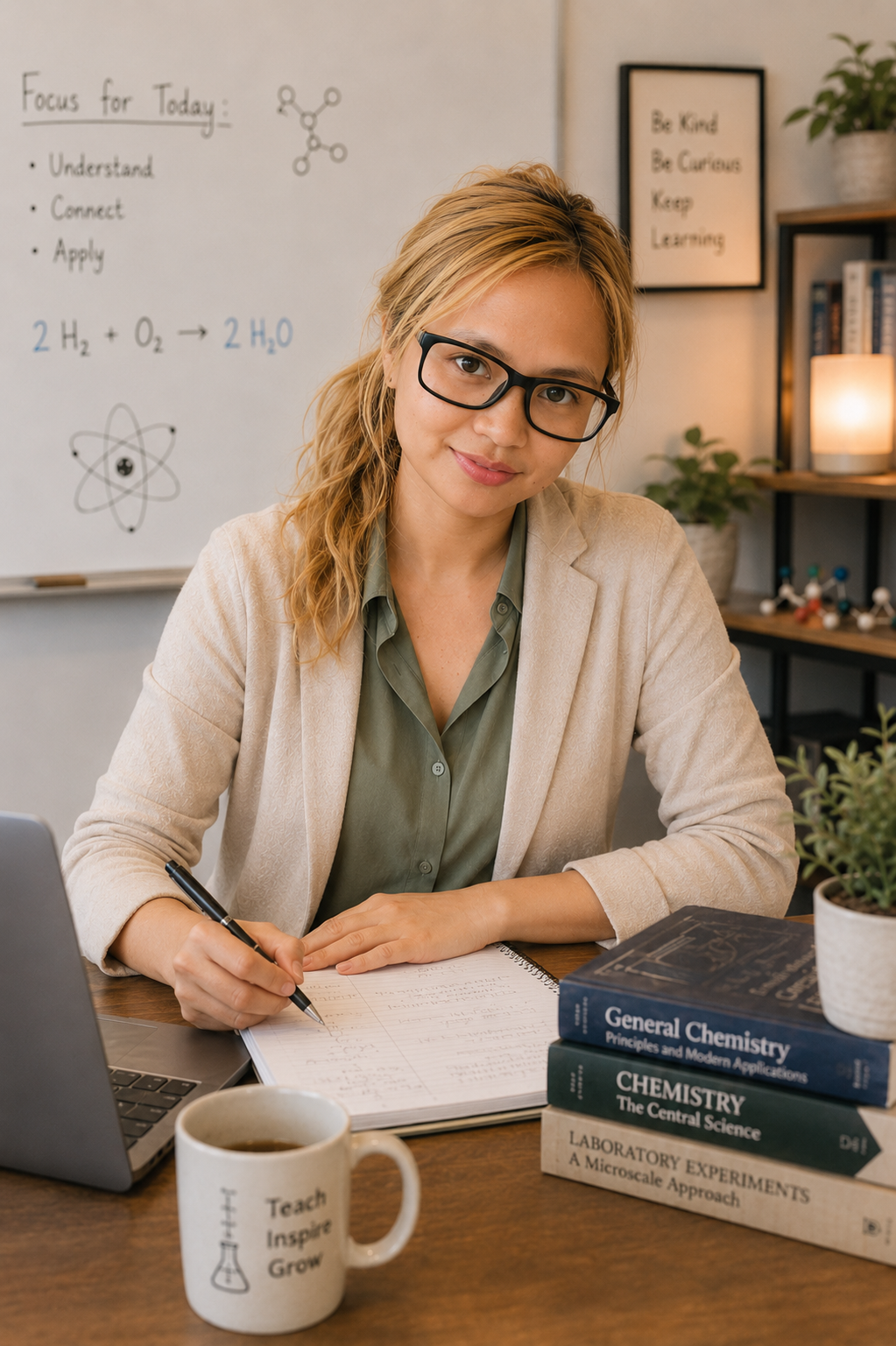
About Adrianne
Adrianne Penullar,
M.S., M.Ed.
I teach chemistry at the high school and college level simultaneously — which means I know exactly where the gap between those two worlds is, because I live in both every single day.
Chemistry didn’t start as a career for me. It started as a problem I kept seeing — students who were smart, capable, and completely stuck. Here’s how I got from there to here.
Chemistry was never just a subject to me.
I studied microbiology at the University of Arizona. After graduation, I started Tutoring Formula LLC with a group of friends — we’d all watched students around us hit the exact same walls in chemistry, over and over, and nobody was explaining it the right way.
That’s where I fell headfirst into organic chemistry. Synthesis problems, reaction mechanisms, functional groups — I loved all of it. Still do. I’d stay up working through orgo problems just because they were interesting.
Six months and a complete change of direction.
I enrolled in an alternative teaching certificate program and student-taught under a chemistry teacher with over fifty years in the classroom. Old school. Textbook-structured. Chemistry at heart.
He showed me what a great chemistry classroom actually looks like from the inside: rigorous, warm, and built on genuine belief that every student can get it if you find the right way to explain it. That stuck with me.
I had no idea that classroom would eventually become mine.
They hired me to teach Anatomy.
Which was not the plan. But I built the curriculum, taught it for a full year at a Title 1 school, and figured out something important early: the content doesn’t scare me — it’s the classroom itself that takes time to master. Classroom management, building relationships with students who’ve had complicated experiences with school — that’s the real first-year challenge.
I call it transferable. I meant it. Every skill I built that year made me a better chemistry teacher in year two.
The district asked me to build the curriculum.
Not just teach it — design it. During and after COVID, I was part of the team that selected textbooks and built curriculum frameworks used across the district. I visited other schools, collaborated with chemistry teachers doing incredible work, and came home with better ideas every time.
This is still some of the work I’m most proud of. When a student opens a chemistry textbook in this district, there’s a chance I helped choose it. That matters to me.
My mentor teacher retired. He left me his classroom.
He’d already told me before he left that AP Chemistry was going to be mine. Fifty years of legacy — the hardest course, the highest stakes, the one he’d spent a career perfecting. I’m building my own curriculum for it now, from scratch, informed by everything I’ve learned since that first student-teaching placement.
Nationally, only about 18% of AP Chemistry students earn a 5 on the exam (2025 College Board data). My job — in the classroom and in tutoring — is to be the reason that number is higher for the students I work with.
I teach high school and college at the same time.
For eight years I’ve been an adjunct professor at the community college level — General Chemistry, Fundamental Chemistry, Chem 151 and 152. I teach both levels simultaneously, which means I know exactly where the gap between high school and college chemistry is, because I cross it every single week.
When a college student tells me their professor moves too fast, I know exactly what they mean — I teach that course. When a parent tells me their kid needs to be ready for college-level chem, I know what that actually requires.
That’s not a talking point. It’s the thing that makes tutoring from me different from tutoring from a grad student who only knows one of those worlds.
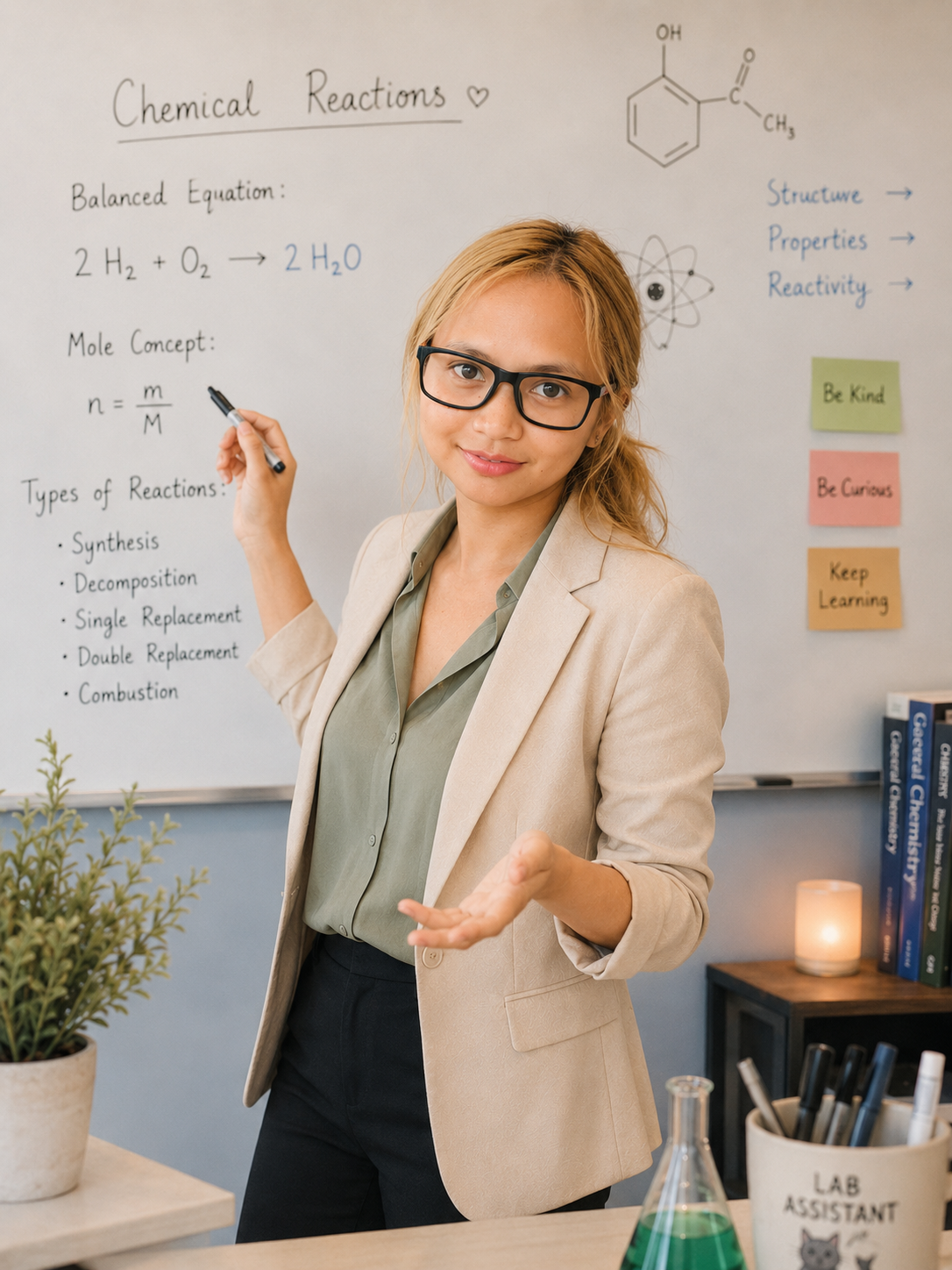
How I Teach
Warmth and rigor aren’t opposites.
Students tell me things they don’t tell other teachers. I think that’s because I make it safe to not know the answer yet.
Prepared for You
Submit your topic or homework 48 hours before our session. I review it, find the gaps, and show up with materials built around exactly where you are — not where I assume you are.
Up Front and Honest
I’ll tell you directly what’s not working and why — no sugarcoating, no false reassurance. Students appreciate knowing where they actually stand. It’s more useful than vague encouragement.
Chemistry is Interesting
I genuinely believe that. My job isn’t to make you tolerate chemistry — it’s to show you what’s actually happening at the molecular level and why that’s worth understanding. It usually works.
What’s Next
Coming 2027: Dr. Penullar.
I’m finishing my doctorate in Education with an emphasis in Curriculum Design — not as a detour from teaching, but as a deeper commitment to it. My dissertation is already shaping how I build lessons and how I think about what students actually need. When I finish, the title changes. The classroom doesn’t.
✦ ✦ ✦
Ready to see if we’re a good fit?
Book a free 20-minute Chemistry Check-In. No commitment — just an honest conversation about where you are and what you need.
FALL 2026 ENROLLMENT OPEN · 4 SATURDAY STUDENT OPENINGS