Eleven years in the AP Chemistry classroom, adjunct instructor at Estrella Mountain Community College, and doctoral researcher at Trident University International — studying how science teachers make instructional decisions at the intersection of print and digital.
I'm Adrianne — I've been teaching chemistry since before I knew I'd make a career of it. I teach AP Chemistry and Physics First at Westview High School in the Tolleson Union High School District, and I'm an adjunct instructor at Estrella Mountain Community College, where I teach Fundamentals of Chemistry (CHM130AA) and General Chemistry I (CHM151AA).
Somewhere along the way I started asking questions about how we teach — not just what we teach. That led me to a doctoral program in Instructional Design at Trident University International, where my dissertation research focuses on how secondary science teachers perceive print versus digital reading formats and how those perceptions shape the decisions they make in the classroom.
Outside of school, I run a chemistry coaching practice at onlinechemtutor.com — a small, selective cohort of students I work with one-on-one throughout a full semester, online, anywhere in the U.S. And I build curriculum resources and educational materials through AnneMade.
I live in Avondale, Arizona, with my husband Albert (a nurse practitioner) and our son Rian, born May 2026.
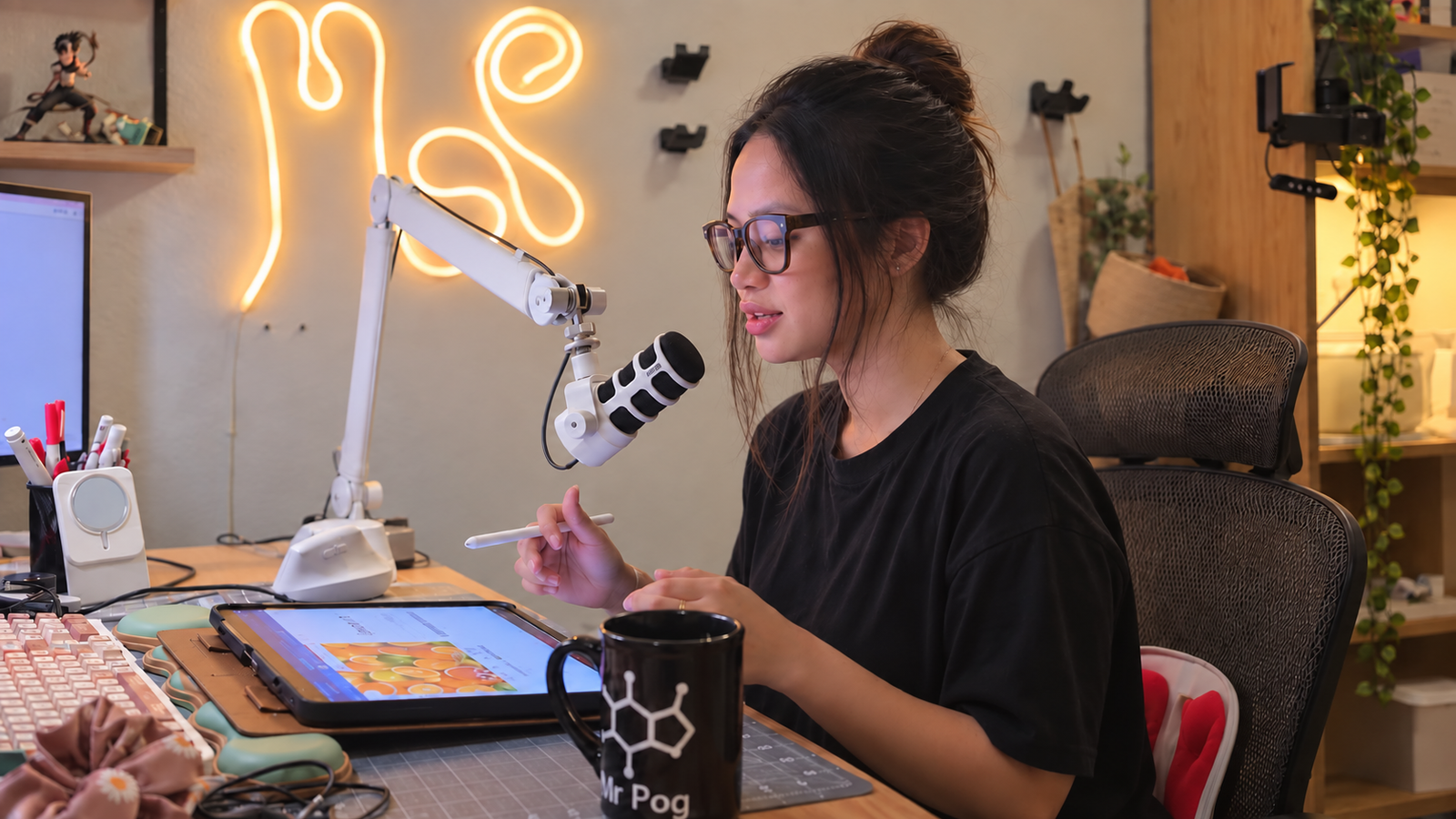
My classroom isn't a place where I explain things and students write them down. It's a place where students wrestle with problems, build arguments, make mistakes, and figure out what went wrong — that's the real chemistry skill I'm teaching.
Students arrive at conclusions through structured investigation, not because I told them the answer. The reasoning matters more than the result.
Wrong answers are data. Every retake and reflection asks students to identify what specifically went wrong and fix it — not just try again.
Chemistry is the context. The actual skill being developed is the ability to evaluate evidence, question assumptions, and communicate reasoning clearly.
A sample of curriculum design and instructional work — built from scratch, grounded in real classrooms, and designed so that any teacher can pick up and run with them.
Nine-unit course fully aligned to the College Board CED, with Canvas-integrated mastery gates, item-banked exams (New Quizzes), per-topic notes-practice-reflection cycles, and a constructivist "Story of Chemistry" through-line anchored to Coulomb's law and energy dispersal.
Qualitative case study examining secondary science teachers' perceptions of how print and digital reading formats affect student comprehension — and how those perceptions shape instructional decisions. Theoretical framework: Cognitive Load Theory (Sweller, 1988). Committee: Dr. Carey Ford, Dr. Emily Mulvihill.
Rebuilt from 23 RateMyProfessor insights and real student feedback. Includes a Google Sites e-Portfolio replacing the traditional paper journal, a 16-CLO mastery contract, pooled item-bank quizzes, and a points-based grading system that runs cleanly on 1000 total points.
Freshmen-level physics curriculum built for the Westview cohort: sub-plan library (Sub Plans 0/2–9), an evidence-mapped CLO design for Unit 1, and a guided Height vs. Wingspan data lab using Vernier Graphical Analysis. Designed to run as a substitute-safe, inquiry-forward sequence.
A transferable, classroom-tested one-lesson package: Cornell notes, case study practice, worked examples, full and abbreviated keys, substitute directions, and a classroom edition. Designed around the NASA Mars Climate Orbiter as the unifying context. Color and B&W print-ready.
Three long-form posts grounded in primary research: AP Chemistry exam weights and Chief Reader patterns; failure factors in general chemistry (Bloom, Dunlosky, Beilock); and constructivist coaching philosophy (Taber, Driver, Dewey). Each post has a cited SVG infographic and Article schema markup.
I run a small, selective semester-based coaching practice for AP Chemistry, high school, and college chemistry students — online, anywhere in the U.S. Six students maximum per semester. Full preparation, every session.
Semester-based, 1:1 chemistry coaching for high school and college students. AP Chemistry, general chemistry, organic chemistry. Online, anywhere in the U.S.
onlinechemtutor.com ↗Classroom curriculum resources, educational materials, and custom gifts — built small-batch with real classroom experience behind every page.
annemadecreates.com ↗Authentic Filipino party trays and catering for West Valley families and events. Party packages, custom orders, and vendor events.
annesfilipinocatering.com ↗